
What Makes a Space Feel Good After Dark?
A lighting designer’s guide to atmosphere, comfort and longevity
There is a moment when a space changes. Daylight fades. Materials soften. The energy shifts. What felt functional at 2pm needs to feel inviting, calm or alive at 8pm. This is where lighting matters most.
At Ayuh Studio, we think of lighting as more than illumination. It shapes how a space is experienced, how people arrive, connect, focus, rest and remember it. A good lighting scheme should not only look beautiful on opening night alone. It should continue to work quietly and thoughtfully through the changing rhythms of everyday life.
Start with a feeling
Before choosing fittings, we begin with a simple question: How do we want this space to feel after dark?
For a restaurant, it may be intimate and warm, with enough light to see the food and the faces across the table. For a workplace, it may mean supporting focus during the day, then creating a softer atmosphere for an evening event. For a home, it may be the feeling of arriving somewhere calm at the end of a long day.
The answer shapes every decision that follows.
More light is not always better
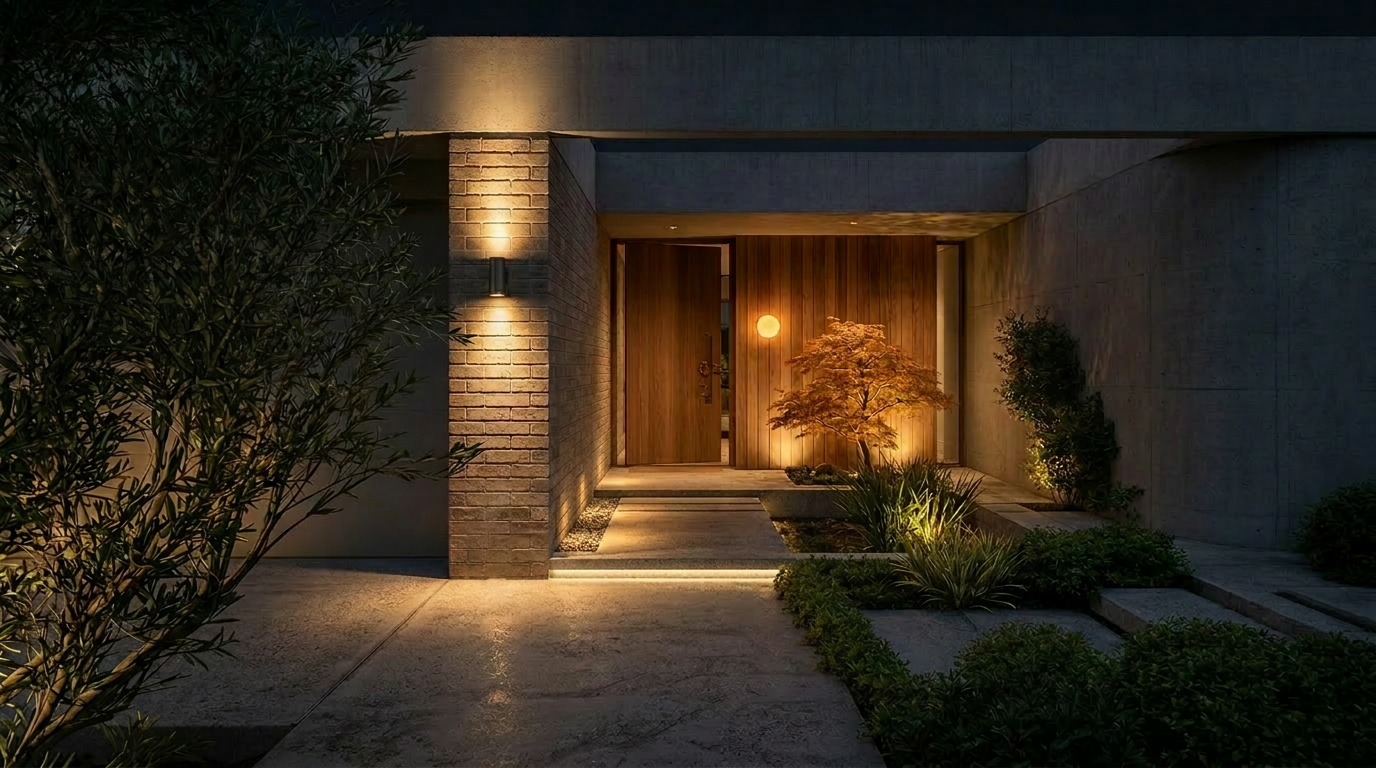
A well-lit space does not need to be bright everywhere. Some of the most memorable spaces use contrast: a softly illuminated wall, a pool of light over a table, a gentle glow that draws you towards an entry or a view.
Lighting works best when it is layered with intention: an overall sense of comfort and orientation, clarity and focus to support activities, reveal texture, art, plants and architectural detail, and bring character, scale and a sense of occasion. The aim is not to add more light. It is to give each layer a reason to exist.
Let materials speak
Light has the ability to change a material completely. It can reveal the grain of timber, give depth to stone, catch the texture of a hand-finished surface, or make planting feel present after sunset. Equally, the wrong light can flatten these details or make a carefully selected palette feel colder than intended.
This is why lighting should be considered alongside the architecture and interiors. Not at the end, when decisions are already fixed. When light and material are designed together, the result feels natural. The architecture remains the focus, while lighting quietly helps it come alive.
Make space for darkness
Not every surface needs to be lit. Darkness creates contrast. It gives the eye somewhere to rest. It makes the moments that are illuminated feel more meaningful.
This is particularly important outdoors, where lighting needs to support safe movement and arrival without spilling into neighbouring properties, washing out a landscape, or adding unnecessary light to the night sky.
Thoughtful lighting is as much about what we leave unlit as what we choose to reveal.
Design for real life
Spaces change throughout the day, and lighting needs to change with them. A café moves from early-morning coffee to a busy lunch service and a more intimate evening mood. A home needs to support weekday routines, quiet moments and gatherings. A workplace needs to flex between individual focus, collaboration and events.
Dimming and lighting controls make this possible. They allow a space to adapt without compromising the original design intent or using more energy than necessary.
The best lighting feels effortless. You may not notice it immediately, but you feel the difference.
A question worth asking
When planning a project, try asking: How do we want this space to feel at 6am, 12pm, 5pm and 8pm?
It is a simple question, but it opens a much richer conversation about atmosphere, comfort, materiality, use and longevity. Because lighting is not just about helping us see. It is about shaping how a space stays with us after dark.